 1800-103-7261
 hello@myndfin.com

A sanctioned bank line can look reassuring on a treasury dashboard. Then the enterprise tries to use it at scale.
The bank may fund established Tier-1 suppliers but not smaller vendors. It may support domestic payables but not a particular receivables platform. A sector limit may tighten, documentation may expire, or seasonal demand may consume the available amount.
The facility still exists, but not necessarily where the business needs it.
This is the weakness of treating one lender relationship as a complete Supply Chain Finance strategy. A bank can remain an important partner without having unlimited capacity or identical appetite across every supplier, dealer, product, and tenor.
A multi-lender platform creates alternatives. Its value, however, disappears if treasury must operate a different process for every financier.
One lender creates a hidden concentration.
The headline value of a facility does not reveal how much can be used for a specific transaction.
Available capacity depends on the lender’s credit policy, exposure to the anchor or sector, approved counterparties, product rules, tenor, and internal capital allocation. A supplier may fall outside one bank’s eligibility criteria. A dealer may qualify for one type of finance but not another.
These are not necessarily service failures. Banks and NBFCs must make independent credit and portfolio decisions. The enterprise must build a funding model that recognizes those boundaries.
The concentration becomes visible when activity changes. Vendor Finance volumes may rise before a production peak, while Dealer Finance demand may increase during a seasonal sales window. A lender that supports normal volumes may lack headroom for the surge.
If no alternative route is ready, an otherwise eligible transaction waits while treasury urgently searches for capacity.
Build the lender portfolio around actual gaps.
Different Supply Chain Finance Solutions create different funding requirements. The same lender may not be the best operational or credit fit for all of them.
Upstream Vendor Finance (payables discounting) and downstream Dealer Finance (channel/inventory funding) carry fundamentally different credit profiles. A Tier-1 commercial bank may readily finance large vendor payables on an anchor-led credit basis, yet resist unsecured dealer financing or longer retail-turnover cycles. Conversely, non-banking financial companies (NBFCs) or regional institutions often specialize in granular distributor financing. A multi-lender platform aligns these institutional risk appetites with specific supply chain tiers.
The design should begin with the underlying transactions, not the number of banks the enterprise wants to appoint.
Which suppliers and dealers need coverage? What invoice sizes, tenors, sectors and locations are involved? Where do seasonal peaks occur? Which transactions are currently rejected or left unfunded?
The answers reveal each lender’s role. A core bank may handle predictable high-volume activity. Other partners may provide segment coverage, additional headroom, or a fallback when the main route is unavailable.
The result is a funding architecture, not a collection of relationships.
Additional lenders can multiply the operating work.
Diversification introduces its own problem: fragmentation.
Each financier may require different files, identifiers, eligibility fields, cut-off times, and reports. Suppliers may face repeated onboarding, while treasury teams monitor several portals and combine separate statements to reconcile funding and repayment.
The enterprise gains theoretical capacity but loses control. It may not know which lender has headroom, why a transaction was rejected or whether the same invoice is moving through more than one process.
Modern enterprise supply chains require neutral digital infrastructure that can integrate disparate banking protocols, host-to-host ERP connections, and diverse document standards into a unified execution environment. Without this common layer, scaling beyond two or three banking relationships creates severe operational friction, manual data reconciliation errors, and reporting fragmentation.
A multi-lender strategy therefore needs one coordination layer. Otherwise, every additional source of capital also adds another operating silo.
How UFX orchestrates the lender waterfall
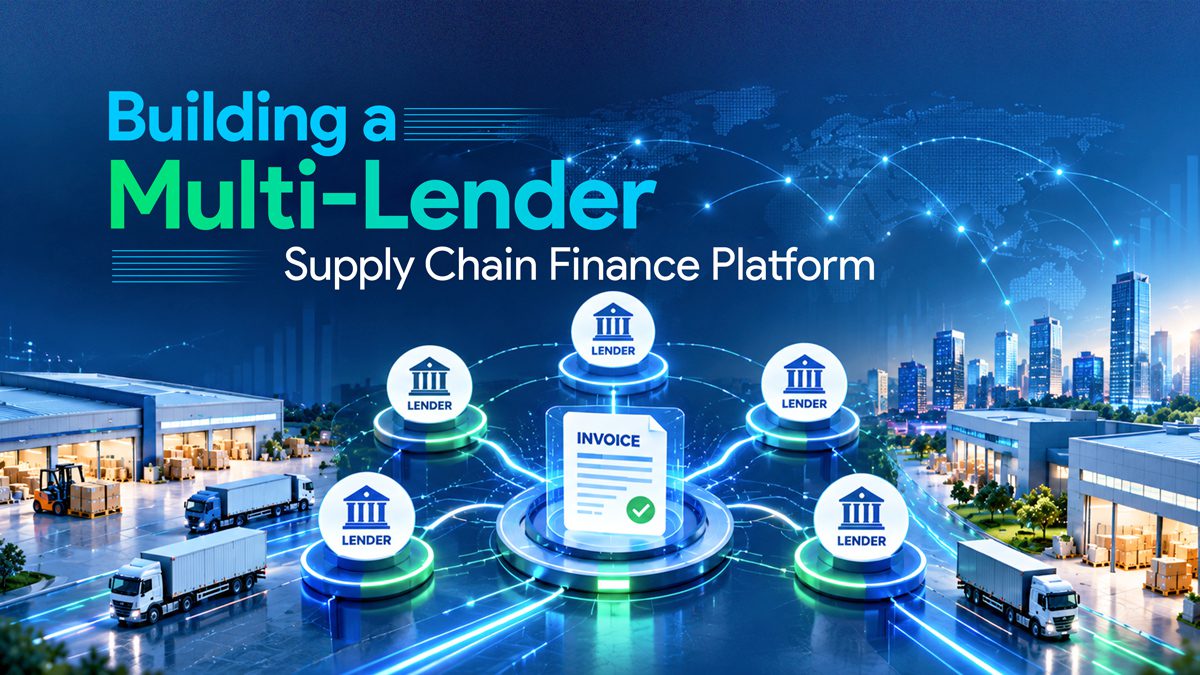
UFX provides a neutral orchestration layer across multiple financing platforms and funding partners. Instead of hard-wiring every transaction to one bank, the enterprise can configure a rule-based waterfall.
An approved invoice or drawdown request enters the waterfall based on enterprise-defined priority rules—evaluating the counterparty’s pre-onboarded lender panel, sanctioned limits, tenor, pricing matrices, and current credit utilization. If the primary financier cannot absorb the transaction due to line saturation or tenor restrictions, the rule engine seamlessly redirects the batch to the next eligible, pre-contracted partner without manual re-keying or broken audit trails.
The sequence does not need to be identical for every transaction. A strategic supplier can follow one lender order, a smaller vendor another, and a dealer-finance transaction a third. The rules may also reflect capacity allocation, cost, or enterprise funding preferences.
UFX records where the transaction was sent, how it progressed, and whether it took another route. This reduces the need for treasury to choose a bank manually for every invoice.
Mynd Fintech’s published overview describes UFX as a unified platform for managing multiple accounts-payable and accounts-receivable financing platforms across domestic and global fund providers. Mynd Fintech Introduces UFX
The important boundary is that routing is not underwriting.
UFX can validate information, apply platform rules, transfer transactions, and return status updates. The bank or NBFC still decides its onboarding requirements, credit appetite, sanctioned limits, pricing, and disbursement. The enterprise remains responsible for confirming the commercial transaction, maintaining accurate data, and approving the routing logic.
The division is clear: the enterprise sets the strategy, UFX coordinates the workflow, and each financier owns its credit decision.
The cheapest route is not always the most useful.
Multiple lenders can create pricing flexibility, but the lowest headline rate should not automatically receive every transaction.
A lower-priced lender may have limited headroom, a shorter tenor, narrower eligibility, or a cut-off that delays funding. Another may provide more dependable coverage for a particular supplier segment even at a slightly higher cost.
Routing can consider complete transaction cost alongside capacity, eligibility and turnaround time. The priorities should reflect the purpose of the platform. A supplier-liquidity initiative may favor dependable access, while another platform may place greater weight on price.
Cost logic must evaluate the true effective cost of capital: comparing nominal interest, upfront processing fees, commitment charges, documentation fees, and day-count conventions across lenders on a standardized basis before routing.
Routing priorities should also change when lender performance or appetite changes. Treasury should be able to update the approved order without rebuilding the integration, while retaining a record of who changed the rule and why.
One control layer should create one operating view.
The platform should reduce the operational burden created by multiple financiers.
UFX acts as an abstraction layer between enterprise ERP systems (such as SAP or Oracle) and disparate bank Core Banking Systems (CBS via Host-to-Host or SFTP). Instead of enterprise IT maintaining custom integration pipelines, file formats, and authentication protocols for each financier, UFX handles data ingestion, canonical mapping, and multi-lender handshakes behind a single interface. Treasury can see whether an invoice was financed, rejected, rerouted, or settled without combining several portal exports.
That common view can also support reconciliation and exception ownership. It should show whether a transaction failed because of incomplete enterprise data, lender eligibility, exhausted capacity, or a technical problem.
Standardization does not eliminate lender-specific requirements. Banks may still need separate agreements, KYC checks, limits and supporting information. The platform coordinates those differences; it does not pretend they do not exist.
Suppliers and dealers must also understand which entity is providing the finance, what terms apply, and where to raise a query. A common interface should make the process simpler without obscuring the actual lender.
Governance turns optionality into resilience.
A lender waterfall is only as reliable as its rules and data.
The enterprise should define who can add or pause a lender, change routing priorities, and adjust allocations. Material changes should be approved and recorded.
Automated safeguards are paramount: the platform enforces strict data validation, invoice de-duplication checks, and ERP synchronization to ensure an invoice in a fallback workflow is never simultaneously pledged or disbursed across multiple institutions. Furthermore, the engine must platformmatically differentiate between an API connectivity timeout and an underwriting rejection, triggering retries for technical drops while preventing rejected transactions from creating systemic reconciliation breaks.
A platform with multiple contracted Supply Chain Finance partners and funding institutions where 90% of the volume still flows through a single line has not achieved true diversification.
Treasury should monitor lender shares, available headroom by platform, and the effect of losing a major route. Contingency planning should cover expired documentation, paused limits, outages and sudden volume peaks. Another lender counts as a fallback only when its documentation, limit, and connection are operational.
Measure usable coverage, not connected lenders.
The number of finance providers connected to a Supply Chain Finance Platform is not proof of diversification.
Useful measures include eligible volume funded, coverage across supplier and dealer segments, lender concentration, limit utilization, fallback frequency, rejection reasons, time to funding, and complete financing cost.
Transactions that reach the end of the waterfall unfunded deserve attention. Were all applicable limits exhausted? Did the counterparty fall outside every lender’s policy? Was the documentation incomplete? The answer indicates whether the platform needs another funder, better information, or a different credit proposition.
Treasury should also test whether additional lenders provide capacity during peak periods. If headroom exists but onboarding or routing prevents its use, the problem is operational rather than financial.
Diversification works when it increases usable coverage and reduces dependence without slowing financing or making it harder to control.
Several bank lines should behave like one strategy.
One bank can be an excellent partner. It should not have to meet every financing requirement across a complex enterprise supply chain.
A multi-lender platform can provide additional capacity, coverage and flexibility. UFX makes those options manageable through defined routing rules, connected workflows and consolidated visibility.
It does not guarantee that every transaction will be funded or that every route will deliver the lowest price. It coordinates the available choices while leaving credit decisions with the financiers.
That is the difference between collecting bank lines and building a funding strategy.
Frequently Asked Questions
What is a multi-lender Supply Chain Finance platform?
It connects more than one bank, NBFC, or approved funder to support different transactions, participant segments, or capacity requirements within an enterprise financing platform.
Why might one bank line be insufficient?
A lender may have limits on sectors, counterparties, products, tenors, or transaction sizes. Available capacity can also change with utilization and portfolio exposure.
What is waterfall routing in Supply Chain Finance?
Waterfall routing is an automated, rules-based mechanism that sequences approved invoices across a designated panel of financiers. Transactions are evaluated against real-time parameters—such as counterparty eligibility, approved facility headroom, tenor, and pricing rules. If the primary funder’s limits are fully utilized or specific criteria are unmet, the system automatically redirects the batch to the next eligible, contracted lender in the approved priority order.
Does UFX make credit decisions?
No. UFX coordinates data, platform rules, routing, and transaction visibility. Each bank or NBFC retains responsibility for underwriting, limits, pricing and disbursement.
Do more lenders guarantee better pricing?
No. Multiple lenders can create pricing flexibility, but the result depends on appetite, eligibility, capacity, tenor, and the complete transaction cost.
