 1800-103-7261
  hello@myndfin.com
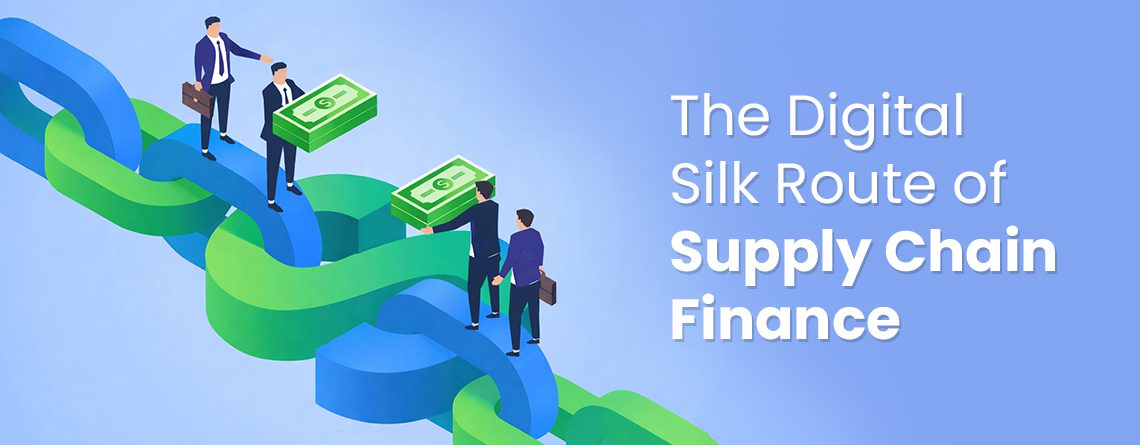
For centuries, the Silk Route catalyzed expanding and optimizing global trade networks. This network of trade, trust, and exchange linked far-flung marketplaces. Although it began with goods in the centre, ideas, wealth, and connections that transformed economies across continents followed through. Similar changes are taking place now in supply chain finance, silently, digitally, and at a never-before-seen pace. It is no longer a collection of separate tools or one-sided agreements. Rather, it is evolving into a network of digital connections where businesses, data, and capital flow freely between countries. The easiest way to describe this new ecosystem is by what people are calling it: the Digital Silk Route. This one links platforms, financial institutions, suppliers, and customers via a common digital infrastructure. This change is not gradual for finance heads, treasury executives, and CFOs. It demands a fundamental rethinking of how businesses facilitate financial access throughout their value chains, how risk gets assessed with dynamic discounting, and how liquidity moves.
Can Traditional SCF Models Keep Pace with Modern Supply Chains?
The foundation of traditional supply chain financing was the linear relationship among a single bank, a supplier, and a buyer. Although this strategy worked well on a smaller scale, it is not up to the challenges of today’s world. Challenges such as multi-tier vendors, globalized supply chains, fluctuating demand, and expanding working capital demands. An interconnected trade finance ecosystem with dynamic interactions among many parties is emerging instead. Capital flows across a network shaped by context, performance, and data, rather than simply moving from lender to borrower. With dynamic discounting, buyers use internal liquidity to prepay, capture discounts, and optimize cash returns. Supply chain finance, however, relies on third-party funders to finance supplier invoices, ensuring suppliers have early access to funds while allowing buyers to maintain liquidity and protect their working capital. This change reflects that supply networks are no longer linear, and the network structure must be reflected in the evolution of finance.
How Is Technology Rewiring the Movement of Liquidity?
Digital platforms now serve as modern trade routes for working capital, much like historical trade routes enabled cross-border commerce. Workflows take the role of paperwork, visibility takes the place of vagueness, and real-time execution takes the place of delays. These platforms are not just for digitizing old procedures; they also do the following:
- Operationalize multi-tier supplier onboarding with automated compliance and performance benchmarking.
- Provide real-time, policy-driven visibility into payables and receivables across tiers.
- Deliver transaction-level risk intelligence to support dynamic discounting and liquidity decisions.
- Embed governance controls that standardize execution across jurisdictions and currencies.
- Strengthen execution reliability with defined approval SLAs, intelligent exception handling, and validation controls that ensure accuracy and consistency across every transaction.
Speed is important to finance leaders, but so are intelligence and control, as well as the capacity to identify liquidity needs and allocate liquidity effectively.
What Happens When Suppliers Gain Financial Predictability?
From the supplier’s standpoint, predictability is often as important as affordability. Suppliers are forced to put liquidity management ahead of operational performance due to erratic cash inflows and uncertain payment schedules. Regularly having prompt access to funding enhances cash management. Moreover, it stabilizes capital cycles and lessens reliance on high-interest-rate short-term borrowing. By giving suppliers visibility and early payment options, tools like dynamic discounting stabilize supply continuity. At the same time, enterprise buyers can strategically optimize DPO, deploy surplus liquidity to achieve risk-adjusted yields, and lower their effective cost of capital. Hence, by coordinating cash availability with actual company activity, large-scale supply chain finance improves supplier economics. Ultimately, financially secure suppliers establish themselves as more dependable partners.
Technology as the Common Language
The Digital Silk Route is built on connectivity, and that cannot function without a common language. That’s why it is fluent with all of these:
- APIs
- ERP integrations
- Standardised data formats
- Automated reconciliation
These technologies permit a shared financial infrastructure to be used by a variety of players. Additionally, scale is enabled, errors are reduced, and manual intervention is eliminated due to its interoperability. This results in quicker settlements, fewer exceptions, and more consistent cash flows for treasury teams. In effect, governance happens without micromanagement. Every transaction aligns with policy, remains fully traceable, and stands ready for audit or regulatory scrutiny.
How Do Real-Time Insights Improve Liquidity Precision?
The impact of context on capital flow is increasingly defining modern supply chain finance. Static credit limits and prior financial accounts are no longer the only factors considered when making financing decisions. Rather, real-time signals such as liquidity position, exposure metrics, supplier delivery parameters, payment patterns, and invoice validation indicate when and how to deploy liquidity. This change enables faster capital flows and more precise risk assessment, both of which align with actual trade activity.
By embedding transparency into digital workflows, Mynd Fintech generates auditable transaction trails and real-time visibility across participants. This reduces friction while enabling CFOs to manage DPO targets actively, compress the cash conversion cycle where strategically appropriate, and strengthen liquidity buffers. Treasury teams gain predictability in execution, and suppliers benefit from structured, reliable access to working capital.
Is Fragmentation Limiting SCF Expansion?
Many organizations seek to expand supply chain finance by adding more programs, banks, or tools, and what they get in return is fragmentation. True scale comes from coordination:
- Bringing stakeholders together around shared goals
- System integration as opposed to system layering
- Creating procedures that are flexible across supplier levels and geographical areas
A connected ecosystem scales organically when each participant benefits from the network effect.
The next phase of supply chain finance will be defined by platforms like UFX that serve as bridges between businesses, investors, and suppliers across financial ecosystems. Their function is to facilitate connectivity, transparency, and collaboration at scale rather than to take the place of banks or treasury departments. For CFOs, the Digital Silk Route is not a call for more funding; it is about disciplined liquidity deployment. It enables calibrated DPO strategies, real-time visibility into tier risk, and unified financial control across geographies. The objective is not to increase capital in the system, but to achieve smarter capital allocation with tighter governance. Those who adopt this change will create supply chains that are more resilient, inclusive, and prepared for the future, while optimizing capital.
